Legally Reviewed by Marc Robert Steinberg on July 27, 2026
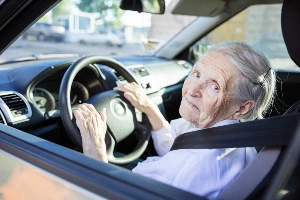 In most situations, the answer is no. Pennsylvania law generally holds each driver responsible for their own actions behind the wheel, and an adult child is not automatically liable simply because a parent is elderly or because the two of you are related. Liability shifts toward you only in specific circumstances, such as when you own the vehicle your parent was driving or when you knew your parent was unsafe behind the wheel and let them drive anyway.
Because these exceptions can turn a family worry into a real legal exposure, it helps to understand exactly where the line falls. At Rubin, Glickman, Steinberg & Gifford, P.C., our car accident lawyers have helped families throughout Montgomery County, Bucks County, and the surrounding Pennsylvania communities sort through liability questions after a crash involving an aging driver. Below is what you should know about your potential responsibility, the legal theories that can create liability, and the steps you can take to protect your family.
Why Elderly Drivers Face a Higher Accident Risk
As people age, changes in vision, reaction time, and cognitive function can make driving more difficult, even for someone who has driven safely for decades. According to the Centers for Disease Control and Prevention, close to 52 million licensed drivers in the United States were age 65 or older in 2022, a 77 percent increase since 2004. That same year, about 9,100 older adults were killed in traffic crashes, and more than 270,000 were treated in emergency departments for crash-related injuries. The CDC also notes that drivers age 70 and older have higher crash death rates per 1,000 crashes than middle-aged drivers, largely because older adults are more vulnerable to serious injury once a crash occurs.
None of this means every older driver is unsafe. Many adjust their own habits, avoiding highways, rush hour, or driving after dark. The CDC also points to a broader set of contributing factors beyond age alone, including changes in physical functioning, memory and reasoning, and the effects of certain medications or combinations of medications, any of which can affect an older adult’s ability to react quickly to changing road conditions.
But when a family member’s abilities decline and a crash follows, it raises the question of what an adult child knew and what, if anything, they could have done differently, which is often the first issue an insurance company examines. We explored how age and experience interact behind the wheel in a related post on whether more driving experience actually makes someone safer.
Are You Automatically Liable for a Parent’s Accident?
Most of the time, the answer is still no. Being an adult child, even one who lives with an elderly parent, pays for their gas, or covers their insurance premium, does not by itself create legal responsibility for how that parent drives. Pennsylvania treats elderly parents as legally independent adults, not as dependents whose conduct is automatically imputed to a caregiver or family member.
This differs from the standard that can apply to parents of minor children, where a parent may face responsibility largely because of the parent-child relationship itself. Pennsylvania does not extend that same automatic responsibility to adult children caring for aging parents. Courts instead look at what you actually owned, what you actually knew, and what you actually did or failed to do, rather than treating family ties alone as a basis for liability.
When Negligent Entrustment Can Create Liability
The most common way an adult child becomes financially exposed after a parent’s crash is through a legal theory called negligent entrustment. Negligent entrustment can apply when you own or control a vehicle and you knowingly allow someone unfit to drive it, such as a parent with worsening vision, slowed reflexes, or a diagnosed cognitive condition, to get behind the wheel anyway.
To succeed on this theory, an injured party generally has to show that you knew, or reasonably should have known, about your parent’s unsafe driving before the crash happened. A single close call is unlikely to be enough on its own, but a documented pattern, such as a prior accident, a doctor’s warning about driving, or family members repeatedly voicing concerns, can strengthen a negligent entrustment claim against the vehicle’s owner.
The practical takeaway is that ownership tends to matter more than relationship. If the car involved is registered solely in your parent’s name and you have no ownership or control over it, negligent entrustment generally will not reach you. If you own the car, or the two of you share it, your awareness of your parent’s driving condition becomes the central legal question.
How Vehicle Ownership and Insurance Affect Your Risk
Some states apply what is known as the family purpose doctrine, holding the owner of a household vehicle responsible whenever a family member causes an accident while using it for a family purpose. Pennsylvania courts have rejected that doctrine. A family relationship alone, even living under the same roof, is not enough to place your parent’s driving conduct on your shoulders.
Pennsylvania instead relies on rules tied to permission and control over the vehicle itself. If your parent was driving a car registered in your name with your consent, express or implied, an injured party may be able to pursue your auto insurance policy for damages, separate from any negligent entrustment claim against you personally. Because car insurance in Pennsylvania generally follows the vehicle rather than the driver, the policy attached to the car often becomes the first source of compensation, regardless of whose name appears on the license.
This is why it matters whether your parent’s car, and the insurance on it, is titled in your parent’s name or in yours. If your parent owns and insures their own vehicle, your personal exposure is typically limited even if you provide some financial support along the way. If you are the titled owner, it is worth reviewing your policy limits with your insurance agent so you understand how a claim involving your parent would likely be handled.
Pennsylvania License Renewal Rules for Older Drivers
Pennsylvania allows drivers age 65 and older to renew a driver’s license every two years instead of the standard four-year cycle, and renewal can typically be completed online, by mail, or in person. The state does not automatically require a vision or medical exam based on age alone, but PennDOT can select a driver for its Mature Driver Re-Examination Program, which includes a vision and physical evaluation, if concerns about fitness to drive are reported by a physician, law enforcement officer, or family member.
These renewal rules exist to help identify drivers who may need additional screening, and they operate separately from the liability questions discussed throughout this article. A license renewal, a completed re-examination, or even a clean driving record does not resolve the question of what you knew about your parent’s abilities at the time of a specific crash. If your parent’s license has been restricted, flagged for review, or is coming up for renewal, that administrative process runs on its own track from any insurance claim or lawsuit connected to a particular accident.
Warning Signs and Ways to Manage Your Parent’s Driving
Family members are often in the best position to notice warning signs before they lead to a serious crash. Watch for new dents or scrapes your parent cannot explain, difficulty staying in a lane, confusion at familiar intersections, or a growing reluctance to drive at night or in bad weather. Addressing these patterns early can reduce both the safety risk and any later argument that you knew about a problem and did nothing.
Consider these steps if you are concerned about a parent’s driving:
- Get an objective assessment. A defensive driving refresher course or an occupational therapy driving evaluation can clarify current abilities.
- Limit driving conditions. Encourage daylight hours, good weather, and familiar routes rather than pushing for an all-or-nothing decision.
- Explore alternatives early. Rideshare services, senior transportation programs, or a family driving schedule can ease the transition before a crisis forces it.
- Have an honest conversation. Frame the discussion around safety and observations, not blame or accusations.
These steps will not eliminate every risk, but they create a record showing you took your parent’s safety seriously, which can matter if a dispute over your knowledge or involvement ever arises.
Considering a Motor Vehicle Power of Attorney
When a parent’s driving decisions become difficult to manage directly, some families set up a Motor Vehicle Power of Attorney. This document lets your parent authorize you to handle vehicle registration, titling, and insurance matters on their behalf, which can be useful if your parent is willing to stop driving but has trouble managing the paperwork involved in selling or transferring a car.
A Motor Vehicle Power of Attorney does not by itself decide who is liable after an accident, and it is not a substitute for addressing an unsafe driving situation directly. It is a practical tool for handling logistics once a decision has already been made. Because the document needs to be properly drafted and notarized, many families set it up alongside other planning documents, such as updated wills and trusts, rather than as a standalone form.
If your family is navigating these decisions for the first time, a Pennsylvania estate planning attorney can help make sure the paperwork matches your parent’s actual wishes and holds up if it is ever questioned later.
What to Do if Your Elderly Parent Is Already in an Accident
If your parent has already been involved in a crash, the immediate priorities are the same as with any accident: make sure everyone involved gets medical attention, report the crash as Pennsylvania law requires, and avoid discussing fault with the other driver or their insurance company before you understand the full picture. Gather the police report, insurance information, and any available witness contact information as early as you safely can. It is also worth having your parent evaluated by their own physician soon after the crash, both for their health and because a medical record close in time to the accident can matter later if their driving ability becomes part of the discussion.
From there, the analysis shifts to the questions covered above: who owned the vehicle, whose insurance is in place, and what you knew about your parent’s driving condition before the crash happened. An attorney can help sort out whether a claim will be directed at your parent’s policy, your own policy, or both, and can deal directly with insurance adjusters so you are not navigating that process alone while also caring for your parent.
In the rare but serious situation where a crash results in a fatality, the legal and emotional stakes rise considerably, and the family of the person who died may have grounds to pursue a wrongful death claim. Whether that claim would be directed at your parent, at you, or at another party depends heavily on the same ownership and knowledge questions discussed throughout this article, which is why early legal guidance matters in these situations.
Frequently Asked Questions About Elderly Parent Car Accident Liability
Can I be personally sued if my elderly parent causes a car accident?
In most cases, no. Pennsylvania law treats your elderly parent as a legally independent adult, so their driving conduct is not automatically attributed to you simply because you are related or provide financial support. You become a more likely target for a lawsuit mainly when you own the vehicle involved and knew, or should have known, that your parent was not safe to drive. Speaking with an attorney early can help you understand whether your specific situation falls into one of these exceptions.
What is negligent entrustment, and how does it apply to elderly drivers?
Negligent entrustment is a legal theory that can hold a vehicle owner responsible for a crash caused by someone they allowed to drive despite knowing that person was unsafe behind the wheel. For elderly parents, this often comes up when a son or daughter owns the car and continues letting a parent drive after noticing declining vision, slowed reactions, or a doctor’s warning. The claim generally focuses on what the owner knew before the accident, not simply on the driver’s age.
Does it matter whose insurance policy covers the car my parent was driving?
Yes. Because auto insurance in Pennsylvania generally follows the vehicle rather than the driver, the policy attached to the car is often the first source an injured person can pursue after a crash. If your parent’s car and insurance are both in their own name, your personal policy is typically not involved. If the vehicle is registered and insured under your name, your policy may respond to the claim even though you were not the one driving.
What happens if my elderly parent’s car accident results in a fatality?
A fatal crash raises the same ownership and knowledge questions discussed throughout this article, but the stakes are higher, and the family of the person who died may be able to pursue a wrongful death claim. Depending on the facts, that claim could be directed at your parent, at another driver, or in limited circumstances at a vehicle owner under a negligent entrustment theory. Given the complexity involved, it is worth speaking with an attorney as soon as possible after a fatal accident.
Can I be affected financially if my elderly parent drives a car registered in my name?
Potentially, yes. If your parent causes an accident while driving a vehicle titled and insured in your name, an injured party may pursue your insurance policy for damages, and your premiums or future coverage options could be affected. This is separate from the question of whether you are personally liable, which typically depends on what you knew about your parent’s driving ability before the crash occurred rather than on the title alone.
What should I do if my elderly parent refuses to stop driving after a crash?
Start with an honest, safety-focused conversation and consider an objective driving evaluation rather than relying only on family opinions about ability. Limiting driving conditions, exploring transportation alternatives, and documenting the steps you have taken can help protect both your parent’s safety and your own legal position. If your parent will not voluntarily stop and you remain concerned about ongoing risk, an attorney can also explain options such as a motor vehicle power of attorney or reporting concerns to PennDOT.
Questions about liability for a parent’s driving are rarely simple, and the answer often depends on details specific to your family, your parent’s vehicle, and what happened in the moments before the crash. At Rubin, Glickman, Steinberg & Gifford, P.C., our attorneys have spent more than 65 years combined helping families throughout Montgomery County, Bucks County, and the surrounding region work through complex accident cases, including situations involving aging drivers, negligent entrustment, and disputed insurance coverage. We take the time to walk through how ownership, insurance, and your own knowledge of your parent’s driving may factor into a claim, so you can make informed decisions instead of guessing at your exposure.
If your elderly parent has been involved in a car accident and you are unsure where you stand, you do not have to work through these questions on your own. Our team can review the details of your situation, explain the legal theories that may apply, and help you understand your potential exposure before you talk to an insurance adjuster. To discuss your specific circumstances, contact us today.
About the Attorney
Partner, Rubin, Glickman, Steinberg & Gifford, P.C.
Marc Robert Steinberg has litigated civil and criminal cases in Pennsylvania courts for more than 51 years and served as the firm’s Managing Partner for 37 years. His practice includes personal injury litigation, and he holds an AV Preeminent rating from Martindale-Hubbell.

Rubin, Glickman, Steinberg & Gifford P.C.
Pennsylvania Attorney's
July 28, 2026