Legally Reviewed by Marc Robert Steinberg on July 29, 2026
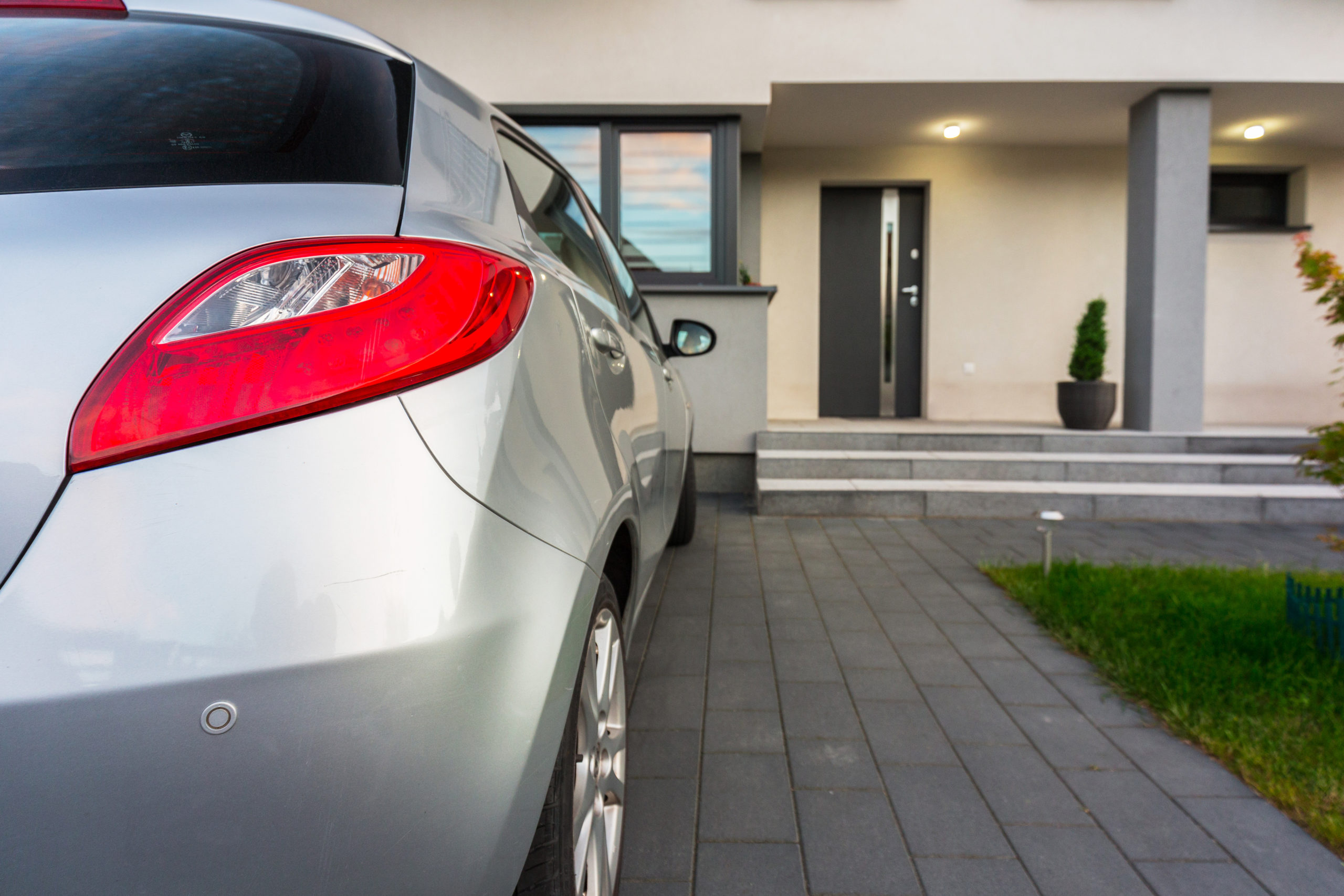 There are many strange rules when it comes to when and where a driver can be arrested for drunk driving. In some instances, drivers may be arrested even though the car is not in motion, while others may be arrested hours or days after the incident occurred. Yes, you can be charged with a DUI in Pennsylvania even if your vehicle never left your own driveway. Pennsylvania’s DUI statute does not require the Commonwealth to prove that you were driving on a public road, only that you were in “actual physical control” of a vehicle after consuming alcohol or drugs.
One common misconception is that Pennsylvania traffic laws only apply when a person is driving on a public roadway, so having a drink in a parked car at home could not possibly break the law. That assumption is incorrect, and it has led to real arrests and convictions. At Rubin, Glickman, Steinberg & Gifford, our Montgomery County DUI defense attorney team regularly hears from clients who were arrested steps from their own front door, and understanding how Pennsylvania defines “actual physical control” is the first step toward building a defense.
Pennsylvania DUI Laws That Apply on Private Property
Pennsylvania’s DUI statute does not mention that a suspect needs to be on a public roadway to be charged with DUI. Pennsylvania Statute § 3802 breaks down the general impairment offense in the following terms:
“An individual may not drive, operate or be in actual physical control of the movement of a vehicle after imbibing a sufficient amount of alcohol such that the individual is rendered incapable of safely driving, operating or being in actual physical control of the movement of the vehicle.”
Notice that the statute never mentions a highway, a road, or a public place. Pennsylvania lawmakers wrote the general impairment law broadly on purpose, and courts have consistently applied it to private driveways, parking lots, and other property that is not open to public travel. What does “actual physical control” mean in practice? Generally, it refers to any situation in which a person could realistically operate the vehicle within a moment’s time. Even someone who merely has the keys to their vehicle while sitting inside may face a DUI charge, even on their own private property.
Police do not need to witness a vehicle moving on a public road to start investigating a possible DUI on private property. Officers may respond to a 911 call from a neighbor, a welfare check request, or their own observation of a car pulling into a driveway after erratic driving on a nearby street. Because a person’s driveway is close to the home, officers generally still need a lawful basis, such as reasonable suspicion or an exigent circumstance, before approaching or detaining someone there, and the same constitutional protections that apply during any other traffic stop grounded in reasonable suspicion can come into play even when the stop happens steps from a front door.
Understanding “Actual Physical Control” Under Pennsylvania Law
Pennsylvania courts look at the totality of the circumstances when deciding whether a driver was in actual physical control of a vehicle. This standard exists because lawmakers wanted to allow police to intervene before an impaired person actually puts the car in motion, not only after an accident occurs. Following the Pennsylvania Supreme Court’s reasoning in Commonwealth v. Wolen, Pennsylvania courts have found that a driver can be in actual physical control of a parked vehicle when the driver is in a position to keep the vehicle restrained or to regulate its movement, even if the car never moves while police are present.
This means a prosecutor does not need to prove that you drove the car on the day of your arrest. Instead, the Commonwealth may try to show that you had the present ability to drive, based on where you were sitting, whether the engine could be started, and what evidence exists that the vehicle had recently been moved. Because this standard is fact-specific, the outcome of a driveway DUI case often depends on details that may seem minor at first glance.
No two driveway DUI cases look exactly alike, which is part of why this area of law can feel so unpredictable to someone facing a charge for the first time. A person found sitting quietly in a parked car with the engine off may be in a very different legal position than someone found behind the wheel with the engine running and the transmission in gear. Courts weigh these details together rather than applying a rigid checklist, and that flexibility can work in favor of a defendant when the facts are genuinely ambiguous.
Does It Matter If the Engine Was Running or the Keys Were in the Ignition?
Prosecutors frequently point to a running engine or keys in the ignition as evidence of actual physical control, but neither fact automatically decides a case on its own. Pennsylvania courts consider several details together rather than relying on any single factor in isolation. Some of the details that commonly come up in a driveway or parked-car DUI case include the following.
- Engine status: Whether the engine was running, warm, or merely capable of being started with keys nearby.
- Location of the keys: Whether the keys were in the ignition, in a pocket, or left inside the home entirely.
- Evidence of recent movement: Whether witnesses, dashcam footage, or a warm hood suggest the vehicle had just been driven.
No single item on this list guarantees a conviction or a dismissal. An experienced defense attorney can examine each piece of evidence individually and challenge whether, taken together, it truly proves you were capable of driving at the time police arrived.
In August 2024, the Pennsylvania Supreme Court added an important boundary to this analysis in Bold v. Commonwealth. The case involved a driver who was found asleep behind the wheel of a legally parked vehicle with the engine running and the headlights on. The Court reasoned that “actual physical control of the movement” of a vehicle requires a realistic ability to direct its immediate movement, and it concluded that a vehicle safely secured in park, with no awake and capable driver, can fall outside that standard even though the engine is on.
This ruling does not mean a running engine can never support a DUI charge in a driveway or parked-car case. Pennsylvania courts still weigh the totality of the circumstances, and a driver who is awake, seated behind the wheel, and capable of putting the vehicle in motion may still face DUI exposure even if the vehicle never moves. What the decision does confirm is that a running engine alone is rarely enough, and that the specific facts of how and where you were found can meaningfully affect the outcome of a driveway DUI case.
What If You Were Sleeping or Parked to Sober Up in Your Driveway?
Many people believe that pulling into their driveway and going to sleep rather than continuing to drive protects them from a DUI charge. Unfortunately, that is not always true under Pennsylvania law. If police find you asleep behind the wheel with the engine running or the keys within reach, they may still argue that you were in actual physical control of the vehicle, even though you never intended to drive again that night.
At the same time, choosing to stop driving and sleep it off can support a defense in the right circumstances. If the facts show that the vehicle had not moved for some time, that you made a deliberate decision not to drive while impaired, and that you posed no immediate danger to anyone, a skilled defense attorney may be able to use those same facts, and the reasoning behind decisions like Bold v. Commonwealth, to argue against a conviction. The specific circumstances of your arrest matter far more than the general scenario.
Temperature and weather can also complicate these cases. Running an engine for heat in the winter or air conditioning in the summer is a common, and often innocent, reason for a vehicle to be on while someone waits inside. Prosecutors and defense attorneys alike may look at how cold or hot it was outside, how long the person had reportedly been parked, and whether the circumstances support an innocent explanation rather than an intent to drive.
Understanding “Highways” and “Trafficways” as They Apply to Pennsylvania DUI Laws
Most Pennsylvania traffic laws apply when a person is driving on a “highway,” which the state defines as “the entire width between the boundary lines of every [road]way publicly maintained when any part thereof is open to the use of the public for purposes of vehicular travel.” In basic terms, a highway is a normal road. Some more serious offenses, including DUI and illegally passing a school bus, also apply to a “trafficway,” which generally means an area where people operate vehicles that is open to the public as a matter of right or custom, such as parking garages and parking lots.
This distinction matters because if you were to drink alcohol on private property that is not considered a highway or trafficway, an experienced attorney could argue that the location itself was not on a public street or a public location like a parking lot. However, if you were to drink in your driveway while inside your car and with the keys in your hand, you could still be found to be in actual physical control of the vehicle and therefore capable, in the eyes of the law, of driving that vehicle onto a public trafficway or highway. Likewise, if police saw you pull into your driveway, the fact that you were on private property at the time of the stop is not automatically indicative of innocence. Even if police did not see you operating a moving vehicle, they can rely on the assumption that you used a public road to return home.
Courts have generally reasoned that impaired drivers do not stay confined to private property. A driver who starts out in a driveway or a private parking lot can just as easily pull onto a public street a few minutes later, so Pennsylvania’s approach focuses on preventing that risk rather than waiting for it to happen. This is one reason a driveway DUI charge can feel unfair to the person facing it, even though the underlying legal theory is well established in Pennsylvania courts.
What Vehicles Count Under Pennsylvania’s DUI Law?
Pennsylvania’s DUI statute defines a “vehicle” broadly, and the definition is not limited to cars, trucks, and SUVs. Motorcycles, ATVs, golf carts, and even bicycles can fall within the scope of the law, which means the vehicle in your driveway does not need to be a traditional passenger car for a DUI charge to apply. If you have questions about how the law treats a specific vehicle, our blog post on whether you can get a DUI on a bicycle in Pennsylvania explains how courts have applied the statute beyond standard motor vehicles.
This broad definition can surprise people who assume that DUI law only concerns motorists on public roads in standard cars. In reality, the combination of a broadly defined vehicle and a driver-focused actual physical control standard means Pennsylvania’s DUI law can reach situations that residents in other states might never expect to face. A rider who pedals a bicycle home while impaired, or a homeowner who moves a riding mower or golf cart around a driveway after drinking, may not realize that either scenario can carry the same general impairment exposure as driving a car on a public road.
Common Defenses to a Driveway DUI Charge in Pennsylvania
Being charged with a DUI in your own driveway does not mean a conviction is inevitable. Depending on the facts of your arrest, several defense strategies may apply. A defense attorney may argue that the Commonwealth cannot prove actual physical control, that the keys were not accessible, or that no evidence shows the vehicle had recently moved. In some cases, police mistakes that can affect a DUI case during the stop, the arrest, or the collection of evidence may also provide grounds to challenge the charge.
Other defenses focus on how officers gathered their evidence in the first place. If officers lacked a lawful basis to approach your vehicle or enter your property, evidence obtained afterward may be subject to challenge. Field sobriety testing and breath test procedures also come under scrutiny in driveway DUI cases, since how Pennsylvania field sobriety tests work and how they are administered can significantly affect their reliability as evidence.
Breath and blood test results are not automatically treated as conclusive proof of impairment. Breathalyzer devices estimate blood alcohol concentration rather than measure it directly, and factors such as improper calibration, certain medical conditions, or an incomplete observation period before testing can all affect the accuracy of a reading. Blood draws can raise their own chain-of-custody and testing-procedure questions. An attorney reviewing a driveway DUI case will typically examine this evidence as closely as the actual-physical-control facts, since a weakness in either area can change the outcome of the case.
How you respond during the stop itself can also shape a defense. Pennsylvania law does not require you to perform field sobriety tests or answer questions about how much you had to drink, and anything said to police before or after an arrest may later become part of the record against you. Bodycam and dashcam footage, when it exists, often plays an important role in these cases because it can show whether the vehicle was moving, how an officer described your condition, and whether proper procedures were followed. If breathalyzer results are part of the evidence against you, it is also worth discussing with your attorney the conditions that can cause a false positive breath test result, since the same medical and environmental factors can affect a driveway or parked-car case.
Penalties and Alternative Programs Like ARD After a Pennsylvania DUI Arrest
A DUI conviction in Pennsylvania can carry fines, license suspension, mandatory alcohol education, and in some cases jail time, and the penalties generally increase with each subsequent offense and with a higher blood alcohol concentration. A first-time general impairment conviction can involve a mandatory minimum term of probation, court costs, and a required alcohol safety assessment, while higher blood alcohol tiers and repeat offenses can bring mandatory minimum jail time and a longer license suspension. The exact penalties a person faces depend on the specific charge filed and their prior record, which is one reason it is worth reviewing the charging documents with an attorney rather than assuming the worst-case outcome applies. For a closer look at how these penalties are structured for Bucks County residents, see our overview of penalties, ARD eligibility, and defense options for a Bucks County DUI charge.
A driveway or parked-car DUI arrest can also trigger a license suspension through Pennsylvania’s implied consent law, separate from the criminal charge itself, particularly if chemical testing was refused or delayed. If you receive a suspension notice after an arrest like this, you generally have a limited window to challenge it, and our overview of the process for contesting a license suspension in Pennsylvania explains what that appeal typically involves.
Many first-time, nonviolent offenders may also qualify for Pennsylvania’s Accelerated Rehabilitative Disposition (ARD) program, which can allow eligible defendants to avoid a conviction and eventually have the charge expunged after completing program requirements. Whether ARD or another resolution is available in a driveway DUI case often depends on the same actual physical control facts discussed throughout this article, which is why an early case review matters. For a broader overview of how these rules fit together, our complete guide to Pennsylvania DUI laws walks through the state’s DUI framework in more detail.
Frequently Asked Questions About Driveway DUI Charges in Pennsylvania
Can you get a DUI in Pennsylvania if you never left your driveway?
Yes. Pennsylvania’s DUI statute does not require proof that a vehicle was driven on a public road. If police believe you were in actual physical control of a vehicle after drinking or using drugs, you can be charged even if the vehicle stayed parked in your own driveway the entire time.
Does the engine need to be running for a driveway DUI charge to apply?
No single fact like a running engine automatically decides a case. Pennsylvania courts consider the engine status along with other circumstances, such as the location of the keys and any evidence of recent movement, when deciding whether someone was in actual physical control of the vehicle.
Can I be charged with a DUI for sleeping in my car in my own driveway?
It is possible. If police find you asleep with the engine running or the keys within reach, they may argue you were in actual physical control of the vehicle. At the same time, evidence that you deliberately stopped driving and posed no danger can support a defense, depending on the specific facts.
What does “actual physical control” mean under Pennsylvania law?
Actual physical control generally refers to a person’s realistic ability to operate a vehicle, even if the vehicle is not moving. Courts look at factors such as where the driver was seated, whether the engine could be started, and whether there is evidence the vehicle had recently been driven.
Did a recent Pennsylvania Supreme Court ruling change how parked-car DUI cases are handled?
Yes, in part. In August 2024, the Pennsylvania Supreme Court held that a vehicle safely secured in park, with no awake driver capable of operating it, can fall outside the actual physical control standard even with the engine running. Pennsylvania courts still weigh the totality of the circumstances, so the specific facts of your case, including where you were found and whether you were capable of driving, continue to matter.
Can a DUI charge from a private driveway be defended or dismissed?
A driveway DUI charge can potentially be challenged. Defenses may focus on whether the Commonwealth can prove actual physical control, whether police followed the correct procedures, and whether the evidence supports the charge. An attorney can review the specific facts of the arrest to identify possible defenses.
Contact an Experienced DUI Defense Lawyer in Montgomery County
If you have been arrested for driving under the influence in your own driveway, acting quickly matters. The Pennsylvania DUI attorneys at Rubin, Glickman, Steinberg & Gifford understand how challenging this time can be, which is why our team is dedicated to fighting for your rights and protecting your interests throughout the legal process. For more than 65 years, our firm has served the legal needs of clients in Montgomery County, Bucks County, Lehigh County, Chester County, Delaware County, and the surrounding areas, and our well-versed legal team understands the ins and outs of Montgomery County DUI defense law. Because driveway and private property DUI cases often turn on fact-specific details, including how recent rulings like Bold v. Commonwealth apply to the facts of your arrest, having attorneys who are prepared to examine those details closely can make a meaningful difference in how a case unfolds.
A DUI charge that begins on your own property can feel especially confusing, but you do not have to sort through the details alone. Our attorneys are ready to review the specifics of your arrest, explain your options, and guard your rights every step of the way. Complete our online contact form today to discuss your case.
About the Attorney
Partner, Board-Certified Criminal Law Specialist
Marc Robert Steinberg has spent more than five decades litigating civil and criminal cases in Pennsylvania’s state and federal courts, including DUI defense. He is certified as a criminal law specialist by the National Board of Trial Advocacy and previously served as a Montgomery County Assistant District Attorney.

Rubin, Glickman, Steinberg & Gifford P.C.
Pennsylvania Attorney's
July 29, 2026