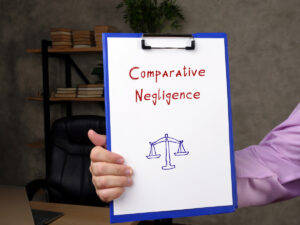
Pennsylvania negligence law follows a modified comparative negligence rule under 42 Pa. C.S. § 7102. Under this law, an injured person can still recover damages even if they were partially at fault for the accident — but only if their share of fault does not exceed 50%. If a plaintiff is found 51% or more responsible, they are barred from recovering any compensation. Damages are reduced proportionally by the plaintiff’s percentage of fault. For example, a plaintiff found 30% at fault in a $100,000 case would recover $70,000.
Understanding how Pennsylvania courts assign fault and calculate damages under the comparative negligence rule can mean the difference between substantial compensation and no recovery at all. At Rubin, Glickman, Steinberg & Gifford, we have successfully navigated these complex fault determinations for over 65 years.
What Is Pennsylvania’s Negligence Law?
Pennsylvania follows modified comparative negligence under 42 Pa. C.S. § 7102. This rule allows injured parties to recover compensation even when they share some responsibility for the accident, provided their fault does not exceed 50%. The key rules are as follows.
- 50% threshold — a plaintiff at 50% fault or less can recover; a plaintiff at 51% fault or more recovers nothing
- Proportional reduction — damages are reduced by the plaintiff’s percentage of fault (e.g., 30% fault = 30% reduction in recovery)
- Multiple defendant cases — governed by the Fair Share Act (Senate Bill 1131, 2011), which holds each defendant liable only for their proportionate share of fault unless one defendant is found 60% or more at fault, in which case that defendant is liable for the full damages
What Is Modified Comparative Negligence in Pennsylvania?
Modified comparative negligence is a legal framework that distributes fault among all parties involved in an accident and allows partial recovery for plaintiffs who share some responsibility. Pennsylvania’s version is sometimes called the “51% rule” — you can recover as long as you are not more than 50% at fault. This contrasts with pure comparative negligence states (where you can recover even at 99% fault) and contributory negligence states (where any fault bars recovery entirely).
Can You Recover Damages If You Were Partially at Fault in Pennsylvania?
Yes — you can recover damages in Pennsylvania if you were partially at fault, as long as your share of fault is 50% or less. Insurance companies and defense attorneys routinely work to inflate the plaintiff’s percentage of responsibility to reduce or eliminate their client’s liability. An experienced personal injury attorney can challenge these tactics by gathering compelling evidence that accurately reflects each party’s actual role in causing the accident.
Types of Cases Affected by Comparative Negligence
Comparative negligence applies to a wide range of personal injury cases in Pennsylvania, including the following.
- Car accidents — speeding, distracted driving, failure to yield, or not wearing a seatbelt can all contribute to fault allocation
- Slip and fall accidents — footwear choices, failure to heed warning signs, or distraction may shift partial fault to the plaintiff
- Medical malpractice — failure to follow physician instructions or disclose medical history may be considered
- Nursing home abuse — family communication failures about a resident’s needs may be raised by the defense
Pennsylvania’s Fair Share Act and Multiple Defendants
When more than one defendant is at fault, Pennsylvania’s Fair Share Act dictates that each defendant is only liable for their proportionate share of damages. A defendant at 48% fault pays 48% of the total damages. However, if a single defendant is found 60% or more at fault, that defendant becomes responsible for the full amount — a provision that protects plaintiffs when the primary at-fault party has sufficient resources to pay.
Rubin, Glickman, Steinberg & Gifford: Protecting Your Rights Under Comparative Negligence Law
Pennsylvania’s comparative negligence system creates both opportunities and challenges for personal injury victims. Our recognition as a “Best Law Firm” by U.S. News & World Report every year since 2010 reflects our ability to achieve favorable results even in complex fault scenarios. If you’ve been injured and face questions about shared responsibility, contact us today at (215) 822-7575 or through our online contact form.