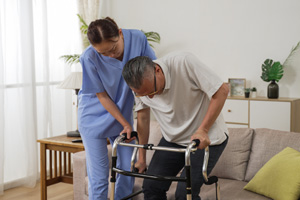
Nursing home residents deserve a safe environment where they can receive the care they need. Unfortunately, falls leading to broken bones or fractures are common in nursing homes, and families often face the devastating impact of these incidents.
At Rubin, Glickman, Steinberg & Gifford, P.C., we are committed to helping families navigate the legal process when their loved ones suffer injuries from nursing home falls.
Common Causes of Falls in Nursing Homes
Falls in nursing homes can happen for many reasons, including environmental hazards, inadequate staff supervision, and improper use of assistive devices. Slippery floors, poor lighting, and cluttered walkways increase the risk of falls for elderly residents. In addition, overworked staff or staff without proper training may fail to monitor residents who are at high risk for falls. Recognizing these common causes helps families determine when a nursing home may be liable for a resident’s injury.
Certain medical conditions and medications also contribute to falls. Health issues like weak muscles, balance disorders, and cognitive impairments make falls more likely. Medications causing dizziness or drowsiness amplify this risk. Nursing homes should have effective fall prevention strategies in place, including regular assessments of residents’ mobility and adjusting care plans to address these risks.
Signs of Negligence Leading to Resident Falls
Families should watch for signs of negligence after a fall. These signs may include a lack of safety measures like handrails and non-slip flooring. If a nursing home does not conduct regular safety inspections or ignores complaints about hazardous conditions, it could indicate neglect. Inadequate staffing levels lead to insufficient supervision, which leaves vulnerable residents without necessary assistance to prevent falls.
Additionally, when nursing home staff lack training on fall prevention techniques, this suggests negligence. Staff members should be equipped to assist residents safely. If families notice that staff neglects to attend to residents’ needs or frequently leaves them unattended, this may signal nursing home abuse or negligence.
Steps to Take After Discovering a Fall Injury
If a loved one suffers a fall injury, families should act quickly to ensure their safety and well-being. Seeking medical attention is essential, as untreated broken bones or fractures can lead to serious complications. A medical evaluation provides necessary care and creates important documentation for legal proceedings. After the evaluation, families should report the incident to nursing home management to ensure it is recorded in their records.
Collecting evidence is crucial for building a case against the nursing home. Families should take photographs of the scene, document any hazards that may have caused the fall, and gather witness statements from residents or staff members. A detailed record of medical treatment and recovery helps as well.
Evidence Needed to Prove Negligence in a Fall Case
To prove negligence in a nursing home fall case, families need strong evidence that the facility failed to provide adequate care. Key evidence includes medical records showing the extent of the injuries, such as broken bones or fractures. Documentation of the nursing home’s fall prevention policies can help determine whether the facility met industry standards. Incident reports filed by nursing home staff at the time of the fall also offer insights into the circumstances.
Witness statements from other residents or visitors can strengthen a case. These accounts may provide firsthand knowledge of the conditions that led to the fall. Photographs or videos of the environment where the fall occurred can also serve as powerful evidence, illustrating hazards that may have contributed to the incident.
Compensation Families Can Seek for Fall-Related Injuries
Families of nursing home residents who suffer fall-related injuries may be entitled to compensation. This compensation can cover medical expenses, including hospital stays, surgeries, rehabilitation, and ongoing care. In addition to medical costs, families may also seek compensation for pain and suffering experienced by the injured resident and emotional distress endured by the family. Loss of quality of life due to the injury can be another factor in a compensation claim.
Frequently Asked Questions
What are the most common causes of nursing home falls?
Environmental hazards like slippery floors and poor lighting, inadequate staff supervision, improper use of assistive devices, and medical conditions or medications that affect balance are all common contributing factors.
What are the warning signs that a fall was caused by neglect?
Missing safety measures like handrails, a lack of regular safety inspections, understaffing, and poorly trained staff who fail to attend to residents are all signs that neglect may have contributed to a fall.
What should I do right after discovering my loved one’s fall injury?
Seek medical attention immediately, report the incident to nursing home management so it’s on record, and begin collecting evidence like photographs, hazard documentation, and witness statements.
What evidence do I need to prove nursing home negligence caused a fall?
Medical records documenting the injury, the facility’s fall prevention policies, incident reports, witness statements, and photos or video of the hazardous conditions all help build a strong negligence case.
What compensation can my family recover for a fall-related injury?
Families may be able to recover medical expenses, pain and suffering, emotional distress, and compensation for the resident’s diminished quality of life as a result of the injury.
Contact a Pennsylvania Nursing Home Abuse Attorney
If you suspect your loved one suffered a broken bone due to negligence in a nursing home, act promptly. Contact Rubin, Glickman, Steinberg & Gifford, P.C. to speak with attorneys experienced in nursing home abuse cases. We can assess your situation and outline the best course of action to pursue justice for your loved one.
At Rubin, Glickman, Steinberg & Gifford, P.C., we work with families to help them seek justice for their loved ones who suffer from nursing home negligence. Contact us today to learn more about your rights and how we can assist in pursuing justice for your loved one. Call Rubin, Glickman, Steinberg & Gifford, P.C. at (215) 822-7575 or use our contact form.
Rubin, Glickman, Steinberg & Gifford P.C.
Pennsylvania Attorney's
August 25, 2026