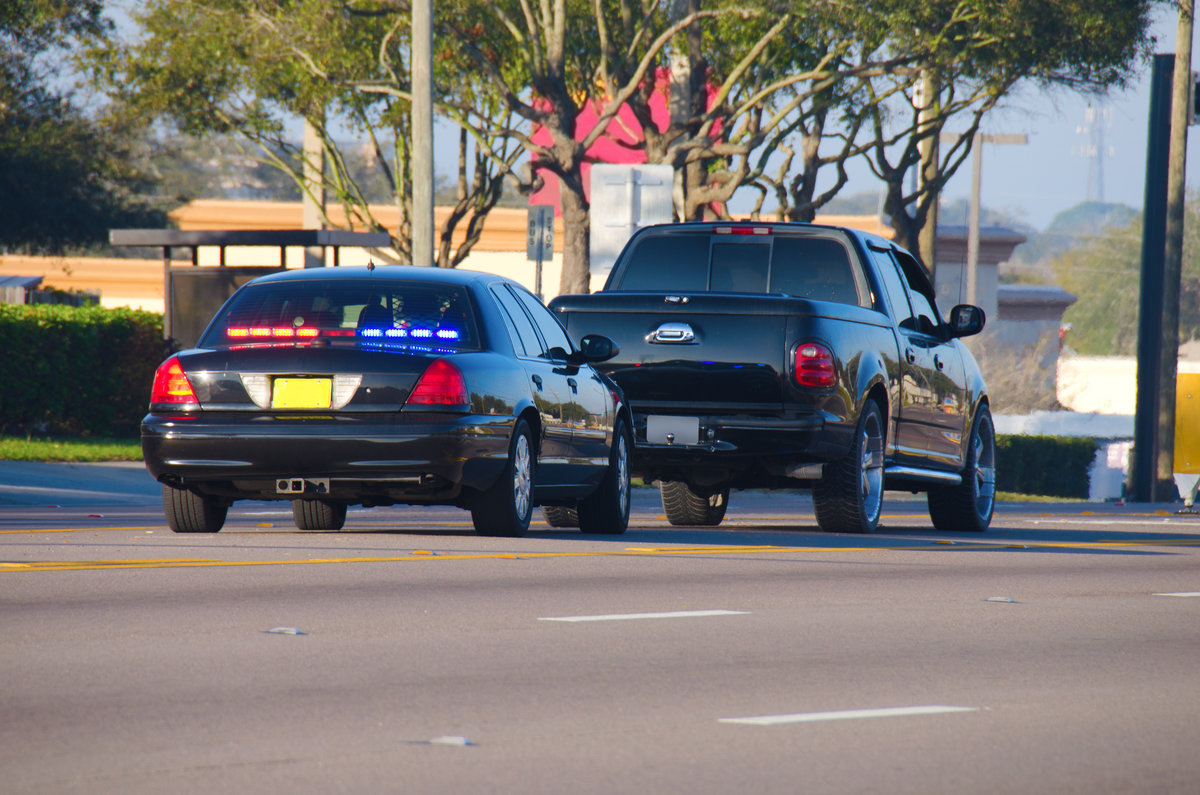
 It is unsettling to be pulled over under any circumstances, but the situation becomes far more serious when you suspect the stop itself may not have been legally justified. In Pennsylvania, police officers cannot pull you over on a hunch or gut feeling. The law sets a clear threshold for when a traffic stop is constitutional, and understanding where that line falls could make all the difference in the outcome of your case.
At Rubin, Glickman, Steinberg & Gifford, P.C., our criminal defense lawyers have seen firsthand how unlawful traffic stops can lead to serious charges, from DUI to drug possession, and how challenging the basis of a stop can be the key to protecting a client’s rights. If you have been stopped by police in southeastern Pennsylvania and believe it was unjustified, we are here to help you understand your options.
What Does ‘Reasonable Suspicion’ Actually Mean?
Reasonable suspicion is a legal standard rooted in the Fourth Amendment of the U.S. Constitution, which protects individuals from unreasonable searches and seizures. According to Cornell Law School’s Legal Information Institute, reasonable suspicion requires specific, articulable facts that would lead a reasonable officer to believe that criminal activity may be occurring. It demands more than vague unease or instinct, but it falls short of the higher bar of probable cause.
How This Standard Applies to Pennsylvania Traffic Stops
In Pennsylvania, an officer must be able to point to concrete, observable facts before initiating a traffic stop. A general feeling that something “seems off” simply does not meet the legal standard. The officer must be able to explain, in specific terms, what they saw or knew that gave rise to their belief that a Vehicle Code violation or criminal activity was taking place.
For example, weaving across lane lines, running a red light, a broken taillight, or driving significantly below the speed limit in a manner consistent with impairment can each serve as a valid basis for a stop. On the other hand, factors like a driver’s race, the neighborhood they were driving through, or an anonymous tip without corroboration are generally not enough to establish reasonable suspicion.
What Types of Observations Can Justify a Traffic Stop?
Pennsylvania courts have extensively addressed reasonable suspicion in the context of traffic violations, and the key question is always whether the officer’s observations were specific and articulable. The following are examples of observations that courts have recognized as potentially supporting reasonable suspicion:
- Equipment violations: Broken headlights, missing license plates, or non-functioning turn signals are visible and are objective infractions that an officer can identify without any interaction with the driver.
- Moving violations: Speeding, running stop signs, improper lane changes, and following too closely all provide an immediate, observable basis for a stop.
- Erratic driving: Swerving, braking erratically, or driving in a manner consistent with impairment can raise an officer’s suspicion that a driver may be under the influence.
- Expired registration or inspection stickers: If an officer can see that a vehicle’s registration or inspection has lapsed, that alone may be enough to justify pulling the vehicle over.
Each of these observations provides officers with specific, articulable facts as required by the reasonable suspicion standard. A stop that cannot be traced back to at least one such concrete observation is vulnerable to a legal challenge.
Can Evidence Be Thrown Out If a Stop Lacked Reasonable Suspicion?
When an officer conducts a traffic stop without adequate reasonable suspicion, anything discovered during that stop may be suppressed. This is known as the “exclusionary rule,” which prevents evidence obtained through an unconstitutional stop from being used against you in court. In practice, this means that if you are charged with DUI or a drug offense following a stop that lacked legal justification, you may be able to have the charges reduced or dismissed by challenging the stop’s validity.
This is one of the most powerful tools available in criminal defense, and it requires an attorney who understands both the constitutional framework and how Pennsylvania courts interpret and apply it. For drivers in Montgomery County and Bucks County, working with a traffic violation lawyer who knows this terrain is essential.
Contact Rubin, Glickman, Steinberg & Gifford, P.C. to Protect Your Rights After a Traffic Stop
If you believe the traffic stop that led to your charges was not legally justified, you deserve a thorough, aggressive review of the facts. Attorney Marc Robert Steinberg, named a Top 10 Criminal Defense Attorney in Pennsylvania by the National Academy of Criminal Defense Attorneys and a longtime Pennsylvania Super Lawyer, leads a team that has been defending clients throughout southeastern Pennsylvania for decades. Attorney Matthew Wilkov also has been awarded the AV Rating and has been repeatedly recognized as a Pennsylvania Super Lawyer and takes lead in criminal litigation. Rubin, Glickman, Steinberg & Gifford, P.C. has earned an AV rating from Martindale-Hubbell and has been recognized as a Best Law Firm by U.S. News & World Report every year since 2010, including a Tier 1 ranking in criminal defense.
Do not assume a traffic stop was lawful, as the constitutionality of that stop may be the foundation of your entire defense. Contact us today for a free initial consultation, and let us put our knowledge to work for you.