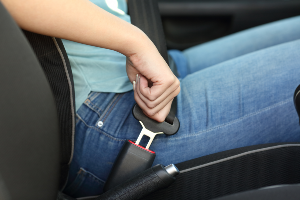
If you were injured in a Pennsylvania car accident and were not wearing a seat belt at the time, you can generally still bring a car accident claim. Pennsylvania law prevents an insurance company from using your seat belt status as proof that you were negligent, and it cannot be introduced as evidence at trial. In practical terms, the fact that you were unbuckled does not, by itself, reduce or eliminate your right to pursue compensation for injuries someone else caused. This protection applies whether you were a driver or a passenger, and regardless of how serious your injuries turned out to be.
Auto accidents raise a number of legal nuances, from how fault is assigned to how insurance adjusters evaluate a claim, and seat belt use is one of the more misunderstood issues among Pennsylvania crash victims. The attorneys at Rubin, Glickman, Steinberg & Gifford have spent decades helping injured clients across Montgomery, Bucks, Lehigh, Chester, and Delaware Counties push back against insurance companies that try to shift blame onto the victim. Below, we break down what Pennsylvania law actually says about seat belt use, how it interacts with the state’s comparative negligence rule, what compensation may be available, and what steps you can take to protect your claim. Whether you were a driver, a front-seat passenger, or a family member pursuing a claim on behalf of someone who was seriously hurt, understanding these rules can help you respond to an insurance company with confidence instead of guesswork.
What Are Pennsylvania’s Seat Belt Laws?
Federal law did not require seat belts in passenger vehicles until 1968. Since then, seat belts have become a standard safety feature in nearly every type of personal vehicle on the road. In the Commonwealth of Pennsylvania, all drivers and front-seat passengers who are 18 years of age or older are legally required to wear a seat belt. Passengers age 18 and older who ride in the back seat are not required to buckle up under state law, although doing so is always safer.
Pennsylvania’s child passenger safety requirements are more detailed. Children under 4 years old must be secured in an approved child safety seat, children under 2 must ride in a rear-facing car seat, and children between the ages of 4 and 8 must use an appropriate booster seat unless they meet the height and weight requirements to use a regular seat belt.
Pennsylvania’s seat belt law for adult occupants is what is sometimes called a secondary enforcement law. This means that, in most cases, a police officer cannot pull you over solely because you are not wearing a seat belt. If you are stopped for a separate traffic violation, however, you or your front-seat passengers may receive an additional citation for failing to buckle up. That citation is a traffic infraction, and it is entirely separate from how fault is determined in a personal injury claim after a crash. Pennsylvania lawmakers specifically addressed that distinction in the state’s motor vehicle code, which is covered in the next section.
Violating Pennsylvania’s seat belt law also carries a fine. Under 75 Pa. C.S. § 4581, adults who fail to buckle up generally face a $10 fine, while violations involving a child passenger restraint system can result in a $75 fine, plus applicable court costs. These fines are administrative penalties for the traffic violation itself, and they are unrelated to, and separate from, how an insurance company or a court evaluates fault in a personal injury claim.
How Pennsylvania’s Comparative Negligence Law Treats Seat Belt Non-Use
Pennsylvania follows a modified comparative negligence rule, sometimes called the 51% rule, under 42 Pa. C.S. § 7102. Under this system, an injured person can recover compensation as long as their own share of fault for the accident is 50% or less. If a jury or insurance adjuster determines you were 51% or more at fault, Pennsylvania law bars you from recovering any damages. When you are found partially at fault below that threshold, your compensation is reduced in proportion to your percentage of responsibility.
The important point for seat belt cases is this: failing to wear a seat belt is not a form of negligence that Pennsylvania courts will weigh against you when assigning fault percentages. 75 Pa. C.S. § 4581(e) states the following.
“[N]or shall failure to use a child passenger restraint system, child booster seat or safety seat belt system be considered as contributory negligence nor shall failure to use such a system be admissible as evidence in the trial of any civil action…”
That means an insurance adjuster or defense attorney cannot point to your lack of a seat belt to argue that you share responsibility for causing the crash, and a judge will not permit that argument at trial. Fault in a Pennsylvania car accident case is based on who caused the collision, such as through speeding, distracted driving, or failing to yield, not on whether you were buckled in when it happened.
What Is the Seat Belt Defense, and Can Insurance Companies Still Use It?
Even though Pennsylvania law prohibits seat belt non-use from being treated as contributory negligence, insurance companies do not always follow that rule during settlement negotiations. What some attorneys call the seat belt defense is an informal argument insurers raise outside of court, claiming that your injuries were more severe than they should have been because you were not restrained.
An adjuster may use this argument to try to justify a lower settlement offer, even knowing the argument would not hold up at trial. This tactic relies on the fact that most injured people negotiate directly with an insurance company before ever filing a lawsuit, and many accept a reduced offer without realizing the seat belt defense is not legally valid in Pennsylvania. Some adjusters handle claims across multiple states and may be applying a rule that exists elsewhere but does not apply here, while others raise the argument simply because it sometimes works. In states that do allow seat belt non-use to reduce a plaintiff’s recovery, insurers become accustomed to using it as leverage, and that habit does not always change when the same adjuster handles a Pennsylvania claim.
Insurance companies are businesses, and their adjusters are trained to minimize payouts using whatever leverage is available, including arguments that would not survive in a courtroom. If an adjuster raises your seat belt use during negotiations, that is a signal to have your case reviewed rather than accepting the number on the table. An experienced Montgomery County car accident attorney can push back on this argument directly and negotiate from a position of legal accuracy rather than pressure.
How Not Wearing a Seat Belt Can Affect the Severity of Your Injuries
While Pennsylvania law keeps seat belt non-use out of the fault conversation, it is still true that seat belts reduce the likelihood and severity of injury in a crash. According to the National Highway Traffic Safety Administration, seat belts reduce the risk of fatal injury to front-seat passenger vehicle occupants by an estimated 45%, and they reduce the risk of moderate-to-critical injury by roughly 50%.
Part of the reason is what safety researchers call a secondary collision. When a vehicle stops suddenly in a crash, an unrestrained occupant continues moving forward at the vehicle’s previous speed until something stops them, often the dashboard, steering wheel, windshield, or another passenger. Wearing a seat belt keeps you positioned in the seat and distributes crash forces across stronger parts of the body, which can meaningfully change the type and severity of injuries you sustain, including certain car seat-related injuries.
This matters for your claim in a practical, not legal, sense. Your medical records document the injuries you actually suffered, and those records form the foundation of your damages claim regardless of seat belt use. An insurance company cannot reduce your compensation because you were not buckled, but adjusters still scrutinize medical documentation closely, which is one more reason to seek prompt treatment after any collision and to follow through with recommended care.
What Compensation May Be Available After a Pennsylvania Car Accident?
Because seat belt use cannot reduce your recovery, the compensation available in your claim depends on the actual losses the crash caused rather than your restraint status. Pennsylvania law generally allows injured drivers and passengers to pursue both economic and non-economic damages from the driver whose negligence caused the collision.
Economic damages typically include medical expenses, both those already incurred and those reasonably expected in the future, along with lost wages if your injuries kept you out of work. Property damage to your vehicle and other belongings may also be recoverable. Non-economic damages, sometimes called pain and suffering, account for the physical pain, emotional distress, and reduced quality of life that often follow a serious crash. The specific value of any claim depends heavily on the facts involved, including the severity of your injuries and the strength of the evidence showing who was at fault, so no attorney can promise a particular outcome before reviewing your case. Deadlines also matter. Pennsylvania generally requires personal injury lawsuits to be filed within two years of the accident, so waiting too long to pursue a claim can limit your options even when liability is otherwise clear.
Does Pennsylvania’s Seat Belt Rule Apply to Wrongful Death Claims?
Pennsylvania’s protection against the seat belt defense is not limited to personal injury claims filed by a surviving accident victim. The same statute applies when a family member brings a wrongful death claim after a fatal car accident. An insurance company representing the at-fault driver cannot argue that the deceased person’s failure to wear a seat belt should reduce the damages available to surviving family members.
Under Pennsylvania law, a wrongful death action is typically brought by the personal representative of the deceased person’s estate on behalf of a surviving spouse, children, or parents. This distinction matters because wrongful death cases already involve difficult questions about lost income, lost financial support, and lost companionship. Pennsylvania lawmakers made a deliberate choice to keep seat belt use out of that calculation entirely, so that grieving families are not forced to relitigate a deceased family member’s personal safety habits while seeking compensation for another driver’s negligence. If your family has experienced a fatal crash and the insurance company has raised the seat belt issue, that argument is not a valid basis for denying or reducing your claim.
Steps to Protect Your Car Accident Claim After a Crash
Knowing that Pennsylvania law protects you from the seat belt defense is helpful, but insurance companies may still try to use it informally, so it helps to know how to protect your claim from the outset. Consider the following steps after any car accident, regardless of whether you were wearing a seat belt.
- Seek medical attention promptly. Getting evaluated right away creates a medical record that documents your injuries and ties them directly to the crash.
- Avoid discussing seat belt use with adjusters. Politely decline to answer questions about whether you were buckled in until you have spoken with an attorney.
- Preserve evidence from the scene. Photographs, witness contact information, and the police report all help establish how the crash happened and who caused it.
- Keep a record of your damages. Track medical bills, lost wages, and other expenses so your attorney can present a complete picture of your losses.
Taking these steps early can make it harder for an insurance company to build a case around your seat belt use, even informally, and can strengthen your position if your claim eventually proceeds to litigation.
Other Types of Negligence That Can Affect Your Case
Although seat belt non-use will not hurt your claim, other forms of negligence can still factor into how fault is assigned under Pennsylvania’s comparative negligence rule. Insurance companies routinely look for any behavior they can use to shift a percentage of fault onto the injured person, which is different from the seat belt-specific protection discussed above.
For example, using a hands-free device while driving can still be scrutinized if it contributed to a delayed reaction or a lane departure, even though hands-free technology is legal in Pennsylvania. Similarly, failing to wear a motorcycle helmet is treated differently than seat belt non-use under state law and can affect a motorcyclist’s injury claim in ways that seat belt non-use cannot affect a car accident claim. Speeding, following too closely, texting while driving, and ignoring posted signage are additional examples insurers may raise when trying to shift fault onto an injured claimant.
Because these arguments can genuinely reduce your compensation, unlike the seat belt defense, it is worth having an attorney evaluate the specific facts of your crash before you accept a settlement offer or make statements to an insurance adjuster. An attorney can gather police reports, traffic camera footage, cell phone records, and witness statements to show how the collision actually happened, which helps counter inflated fault arguments before they influence a settlement offer.
Contact an Experienced Car Accident Lawyer in Montgomery County
For more than 65 years, the attorneys at Rubin, Glickman, Steinberg & Gifford have represented injured clients throughout Montgomery County, Bucks County, Lehigh County, Chester County, Delaware County, and the surrounding areas. Our firm has been recognized as a Best Law Firm by U.S. News & World Report, and our attorneys have been named to lists including Pennsylvania Super Lawyers and Rising Stars for their work on behalf of accident victims. That combination of longevity and recognition reflects an approach built on preparing every case as though it may go to trial, which can matter a great deal when an insurance company is weighing whether to negotiate fairly. Founded in 1952, our firm has grown alongside the communities we serve, and many of our attorneys have spent their entire careers handling Pennsylvania car accident and personal injury claims.
If you were injured in a car accident and were not wearing a seat belt, you may still have a strong claim against the driver who caused the crash. We can review the details of your accident, explain how Pennsylvania’s comparative negligence rule applies to your situation, and help you pursue the compensation you may be owed for medical bills, lost wages, property damage, and other losses. To discuss your case with our team, complete our online contact form today.
Frequently Asked Questions About Seat Belt Use and Car Accident Claims in Pennsylvania
Can I still file a car accident claim in Pennsylvania if I wasn’t wearing a seat belt?
Yes. Pennsylvania law prevents your failure to wear a seat belt from being treated as negligence in a car accident claim, and it cannot be used as evidence against you at trial. You retain the same right to pursue compensation from an at-fault driver as any other injured person, regardless of whether you were buckled in at the time of the crash. This protection applies to drivers and passengers alike, and it holds regardless of how serious your resulting injuries turned out to be.
Can an insurance company use my seat belt use to lower my settlement offer?
An insurance adjuster may informally raise the issue during negotiations, sometimes called the seat belt defense, but this argument does not hold up under Pennsylvania law and cannot be presented at trial. If an adjuster brings up your seat belt use to justify a lower offer, it is worth having your case reviewed before accepting any settlement, since the offer may not reflect what the claim is actually worth once the argument is set aside.
What does Pennsylvania’s comparative negligence law mean for my car accident claim?
Pennsylvania follows a modified comparative negligence rule, often called the 51% rule. You can recover compensation as long as your share of fault for the accident is 50% or less, though your damages are reduced by your percentage of responsibility. If you are found 51% or more at fault, state law bars you from recovering any compensation. Insurance companies often dispute fault percentages, so having supporting evidence from the scene can directly affect how much you ultimately recover.
Does Pennsylvania’s seat belt protection apply to wrongful death claims?
Yes. The same law that prevents seat belt non-use from being used as evidence of negligence in a personal injury case also applies to wrongful death claims brought by surviving family members. An insurance company cannot argue that a deceased victim’s failure to wear a seat belt should reduce the compensation available to the family. This holds true whether the wrongful death claim is brought by a spouse, a child, or the personal representative of the deceased person’s estate.
What should I do if an insurance adjuster asks about my seat belt use?
You are not required to discuss your seat belt use with an insurance adjuster, and it is generally best to avoid doing so without legal guidance. Politely decline to answer questions on the topic, focus on documenting your injuries and the circumstances of the crash, and consider speaking with an attorney before giving a recorded statement. Adjusters sometimes phrase questions in ways that can be misread later, so having an attorney review any statement beforehand can help protect your claim.

Rubin, Glickman, Steinberg & Gifford P.C.
Pennsylvania Attorney's
August 7, 2026