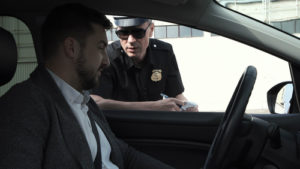
 The Fourth Amendment of the United States Constitution holds that every individual has a right to live free from unreasonable search and seizure by law enforcement. The founding fathers were concerned about unfair bodily and home searches while drafting this amendment. In modern times, there has been extensive debate about whether this right extends to a driver and his vehicle.
The leading case on this question is Arizona v. Gant, decided by the U.S. Supreme Court in 2009. The Court held that police may search a vehicle incident to an occupant’s arrest only if the arrestee could still reach into the vehicle at the time of the search, or if it is reasonable to believe the vehicle contains evidence of the crime the person was arrested for. That decision narrowed what had previously been a much broader assumption that an arrest alone justified a full vehicle search, and it remains the foundation for understanding the Fourth Amendment in the context of drivers on the road.
Probable Cause for a Traffic Stop in Bucks County, Pennsylvania
Because of Gant, an arrest by itself does not automatically permit officers to search your vehicle. A search may still be conducted when an officer has probable cause that evidence of a crime will be found inside. In addition, police searches of a car are legal when evidence of an illegal activity is in plain view or when the driver consents to a search. A police officer who doesn’t have any legal basis to search your vehicle will often ask for consent, and you don’t have to comply.
Talk to an Experienced North Wales Criminal Defense Attorney About Your Pennsylvania Traffic Stop
The most commonly challenged aspect of traffic stops is probable cause arguments that police tend to make to justify a vehicle search. A police officer may claim to smell a marijuana odor or attempt to fabricate a cause to search your car. It’s important to know your rights. The Pennsylvania criminal defense attorneys at Rubin, Glickman, Steinberg & Gifford P.C. will fight to get any evidence obtained in an illegal search thrown out in court. We handle criminal defense cases throughout Bucks County and Montgomery County, PA, including New Britain, Quakertown, Perkasie, North Wales, Lansdale, and Hatfield. If you think your rights were violated in an unlawful traffic stop, fill out the online form to discuss your case with one of our criminal defense lawyers.
The articles on this blog are for informative purposes only and are no substitute for legal advice or an attorney-client relationship. If you are seeking legal advice, please contact our law firm directly.
Frequently Asked Questions About Fourth Amendment Rights in Traffic Stops
Can police search my car just because I was arrested during a traffic stop?
Not automatically. Under Arizona v. Gant, police may only search the vehicle if you could still reach it at the time of the search or if there’s reason to believe evidence of the arrest offense is inside.
Do I have to consent to a vehicle search if an officer asks?
No. If an officer doesn’t have a legal basis to search without your permission, they may ask for consent, but you are not required to give it.
What counts as probable cause to search a vehicle?
Probable cause exists when an officer has a reasonable basis to believe evidence of a crime is present, such as visible contraband or a credible claim of smelling drugs or alcohol, though these claims can be challenged in court.
What happens if evidence was obtained through an illegal search?
Evidence obtained through a search that violated your Fourth Amendment rights can potentially be suppressed, meaning it may be excluded from being used against you in court.
Can something in plain view justify a search?
Yes. If evidence of illegal activity is clearly visible without the officer needing to search further, that plain-view observation can independently justify further action.

Rubin, Glickman, Steinberg & Gifford P.C.
Pennsylvania Attorney's
August 13, 2026